
Get Your Free Quote…!


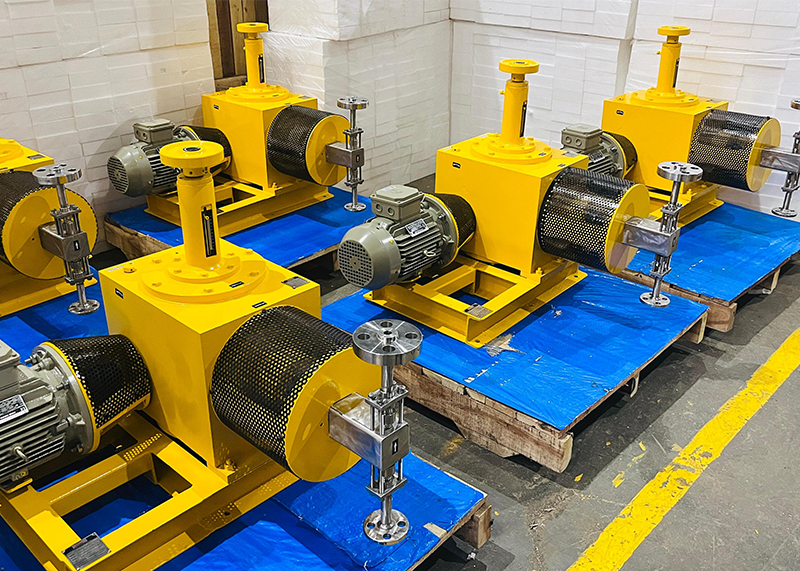
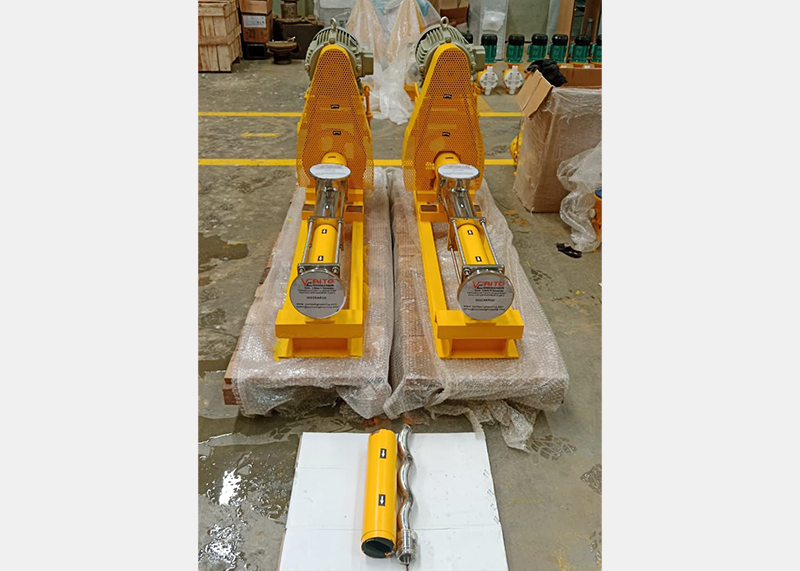
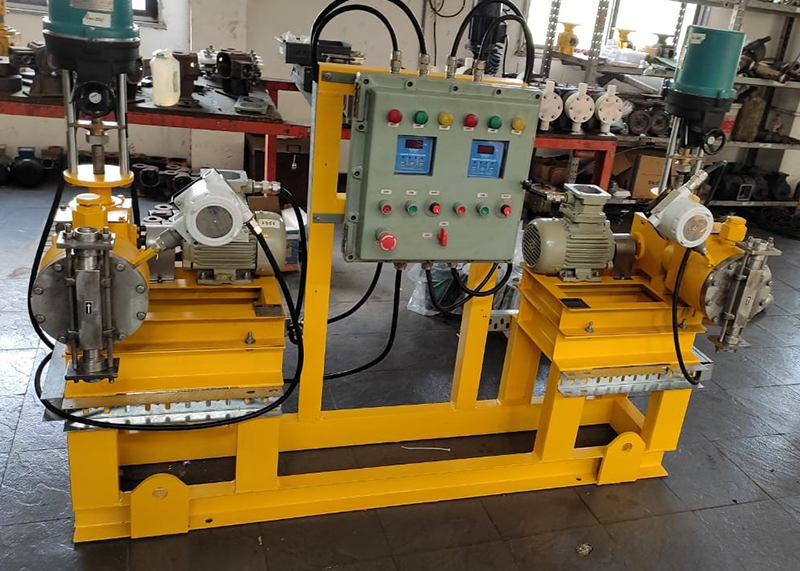
An electronic dosing pump, also called an electronic metering pump is a precision positive displacement pump operating at 230V, 50Hz supply that delivers an exact, adjustable volume of liquid over a defined time period. The pump uses either a solenoid coil or a motor to actuate a flexible diaphragm inside a pump head. On the suction stroke, the diaphragm retracts, drawing liquid through an inlet check valve into the pump chamber. On the discharge stroke, the diaphragm compresses, closing the inlet valve and forcing the liquid out through the outlet check valve at a precisely controlled rate. This mechanism ensures accurate chemical injection regardless of back-pressure variations in the downstream system.


| No | Technical Specification | Capacity |
| 1 | Power Supply | 230v AC, 50Hz |
| 2 | Power consumption at max. speed | 40 Watta |
| 3 | Fuse | 500mA / 230v Ac |
| 4 | Pump stroke per minute {adjustable} | 120 Max |
| 5 | Negative Suction | 1 Mtr |
| 6 | Environment Temperature | 40'C Max |
| 7 | Capacity Max | 50 Lph |
| 8 | Pressure Max | 17 Kg |
The solenoid coil or motor receives an electrical signal and drives the pump's actuator at the set frequency.
The diaphragm retracts, creating a low-pressure zone in the pump chamber. The inlet check valve opens and draws the chemical into the chamber.
The diaphragm moves forward, pressurising the chamber. The inlet valve closes and the outlet check valve opens, discharging a precise volume.
The cycle repeats at the programmed frequency and stroke length, delivering a continuous, accurately metered flow.






A: The terms are interchangeable. Both describe a pump that delivers a precise, adjustable volume of liquid at a controlled flow rate. “Dosing pump” is the more common term in water treatment; “metering pump” is preferred in petrochemical and process industries.
A: Compatible chemicals include acids (HCl, H₂SO₄), alkalis (NaOH), hypochlorite (NaOCl), antiscalants, coagulants, flocculants, polymers, and most industrial reagents — subject to wetted part material compatibility.
A: Key parameters are: required flow rate (LPH), system back-pressure (bar), chemical compatibility with wetted parts, and control signal type (manual, 4–20 mA, or pulse). Contact our engineers for a free sizing recommendation.
A: Periodic replacement of the diaphragm, check valves, and pump head seals — typically every 12–24 months depending on chemical aggressiveness and duty cycle. Spare parts kits are available.