
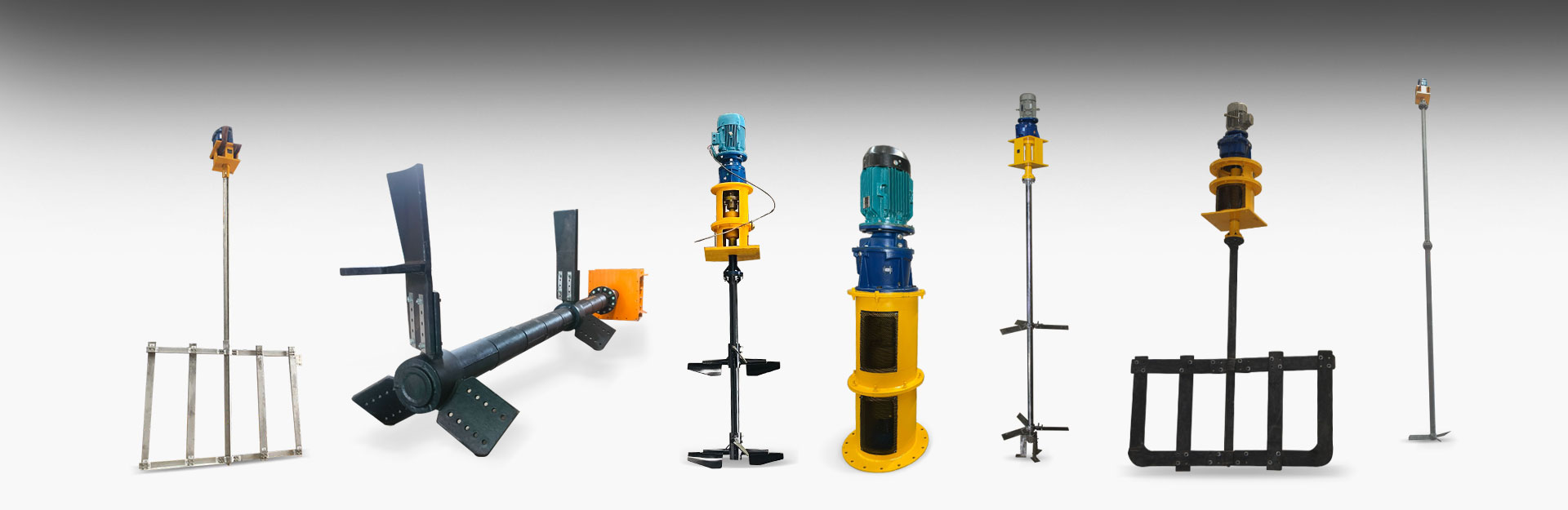
Mixer motor horsepower directly controls mixing success. Mixer motor horsepower determines whether you blend materials efficiently or face costly failures.
The wrong motor size creates three immediate problems. First, mixing cycles extend beyond production schedules. Second, motors overheat from overload stress. Third, equipment fails prematurely and requires replacement.
The correct motor size delivers predictable results. Predictable results mean consistent product quality. Consistent product quality reduces customer complaints and remanufacturing costs.
The core relationship links motor power to material viscosity. Viscosity measures how thick or resistant a fluid is to flow. Different viscosity levels require different energy amounts. A motor sized for thin water may stall with heavy grease. A motor sized for grease wastes energy with thin water.
Industrial facilities process thousands of material types daily. The chemical, pharmaceutical, food, and cosmetics sectors depend on proper motor sizing. Proper motor sizing prevents three costly outcomes: extended mixing cycles, inadequate blending, and motor burnout.
This guide explains how to match motor horsepower to your viscosity requirements. You will learn to calculate power needs. You will understand motor specifications. You will select equipment that delivers reliable performance.
Why Mixer Motor HP Rating Matters in Industry
Mixer motor horsepower represents the energy available for blending materials. This energy becomes critical when working with thick substances.
Power requirements increase significantly because viscosity creates resistance. Viscous materials need more force to move through the mixing chamber. The thicker the material, the greater the horsepower needed. A 5 horsepower (HP) motor handles low-viscosity products easily. The same motor struggles with high-viscosity materials.
Under-sizing motor power generates multiple operational risks:
- Mixing cycles extend far beyond target timelines
- Motor heat buildup occurs from continuous overwork
- Product blending becomes incomplete and inconsistent
- Motor lifespan shortens from excessive strain
Over-sizing motor power wastes company resources. Energy consumption rises without corresponding production benefits. Equipment becomes more expensive upfront without a justifiable return.
Proper horsepower matching delivers three business advantages: predictable production timelines, extended equipment lifespan, and optimized energy efficiency. Industries following these principles report 20-30% reduction in energy costs compared to improperly sized systems. They also report 40% fewer maintenance issues compared to improperly sized systems.
How Viscosity Determines Mixer Motor Power Requirements
Viscosity represents the primary factor influencing horsepower selection. Understanding viscosity and power relationships enables accurate motor sizing.
Viscosity measurement uses two common scales. The Saybolt Universal Viscosity (SUV) scale applies to thin fluids. Fluids measured on the SUV scale range from 32 to 100,000 Saybolt Universal Seconds (SUS). The Brookfield scale measures thick materials. Thick materials use centipoise (cP) as the unit. One SUS equals approximately 0.226 centipoise for fluids below 100 SUS.
Viscosity falls into four distinct categories that establish power profiles:
Low-Viscosity Materials (Below 100 cP)
Low-viscosity materials include water, milk, juices, and thin oils. These materials flow freely and offer minimal mixing resistance. A 1-3 HP motor handles most low-viscosity applications efficiently. Typical examples include beverage mixing, dairy processing, and light oil blending.
Medium-Viscosity Materials (100-1,000 cP)
Medium-viscosity materials include peanut butter, ketchup, and light creams. These materials flow with moderate resistance. Motors in the 3-10 HP range serve most medium-viscosity operations successfully. Typical examples include cosmetic cream mixing, food sauce preparation, and mayonnaise production.
High-Viscosity Materials (1,000-10,000 cP)
High-viscosity materials include heavy greases, thick sauces, and specialty adhesives. These materials resist flow substantially. Motors in the 10-30 HP range become necessary for effective mixing. Typical examples include grease production, thick paint mixing, and adhesive blending.
Ultra-High-Viscosity Materials (Above 10,000 cP)
Ultra-high-viscosity materials include tar-like substances, polymers, and compacted materials. These materials barely move. Specialized systems use 30-100+ HP or incorporate low-speed high-torque (LSHT) designs. Typical examples include polymer processing, tar-based product manufacturing, and putty production.
The power requirement increases in a non-linear pattern. Doubling the viscosity does not double the power needed. The relationship depends on impeller design, tank geometry, and mixing speed. A proportional increase of 1.5 to 2 times the power often occurs when viscosity doubles because different operating speeds suit each viscosity level.
Example calculation: A mixer handling 500 cP material requires 8 HP. The same mixer processing 2,000 cP material requires 15-18 HP, not 16 HP. Different speeds and impeller configurations optimize results at each viscosity level.
Types of Mixer Motors and Their HP Specifications
Industrial mixing systems employ different motor types. Each motor type offers distinct horsepower ranges. Each motor type offers distinct performance characteristics.
AC Electric Motors
AC (alternating current) electric motors dominate industrial mixing. These motors provide reliable, continuous power across standard electrical infrastructure. AC motors come in 3 primary configurations.
1. Drip-Proof Totally Enclosed (DPTE) Motors
DPTE motors feature sealed designs. Sealed designs protect internal components from splashing materials. These motors typically range from 0.5 HP to 50 HP. Industries use DPTE motors for water-based products. Industries use DPTE motors for general manufacturing.
2. Hazardous Location Motors
Hazardous location motors meet safety standards for explosive environments. They carry ATEX, UL, or CSA certifications. These motors typically range from 1 HP to 100 HP. Pharmaceutical, chemical, and petrochemical facilities require these specialized motors. Facilities with flammable vapor atmospheres require these specialized motors.
3. High-Temperature Motors
High-temperature motors withstand extreme heat. Heat comes from hot materials or ambient conditions. These motors typically range from 2 HP to 75 HP. Food processing and chemical manufacturing depend on high-temperature designs.
Variable Frequency Drive (VFD) Motors
VFD (variable frequency drive) motors adjust speed dynamically. They adjust speed based on current mixing requirements. VFD systems reduce energy consumption by 20-40% compared to fixed-speed motors because they operate at optimal speeds rather than maximum speeds continuously. VFD motors typically range from 1 HP to 200+ HP. Food production, pharmaceutical blending, and chemical processing commonly employ VFD technology. These facilities handle multiple viscosity products on the same equipment.
Low-Speed High-Torque (LSHT) Motors
LSHT motors produce maximum torque at lower speeds. Maximum torque makes them ideal for ultra-high-viscosity applications. These motors move slowly but powerfully through extremely thick materials. LSHT motors typically range from 5 HP to 150+ HP and operate at 50-300 RPM (revolutions per minute). Heavy polymer processing, adhesive manufacturing, and tar-based product mixing require LSHT motor designs. Low speed prevents material degradation that high-speed mixing causes.
How to Select the Right Mixer Motor Size
Selecting appropriate horsepower involves evaluating 5 primary factors. Following this systematic approach prevents over-sizing errors. Following this systematic approach prevents under-sizing errors.
First, identify your material’s viscosity level. Measure viscosity using industry-standard methods. Contact material suppliers for viscosity data if direct measurement is unavailable. Record viscosity in consistent units. Consistent units are cP or SUS for accurate calculations.
Secondly, determine your required production volume. Document how much material you need to mix per batch. Document your total daily throughput. Larger batches demand proportionally more power because the mixer must move greater volumes.
Thirdly, establish your target mixing time. Define how long the mixing process should take. Faster mixing times require higher horsepower. Slower mixing cycles accept lower horsepower but extend production schedules.
Fourthly, review impeller design options. Different impellers suit different viscosity ranges. Turbine impellers optimize low-viscosity mixing. Ribbon impellers handle high-viscosity materials efficiently. Anchor impellers excel in ultra-high-viscosity applications. The impeller design influences total power requirements significantly.
Finally, account for operating environment factors. Consider ambient temperature. Consider material temperature. Consider facility electrical capacity. Hot materials behave differently than cold materials. Limited electrical service may require lower horsepower motor selections.
Power Calculation Formula
The practical power calculation incorporates 4 key variables: viscosity (η in cP), batch size (V in gallons), mixing speed (N in RPM), and impeller diameter (D in inches).
Power (P in HP) is calculated using this formula:
P = (η × V × N³ × D⁵) / 1,714,000,000
This formula provides baseline horsepower estimates. Real-world variations occur because material temperature affects power needs. Ingredient density affects power needs. Specific gravity affects power needs.
Example application: Calculate power for a 100-gallon batch of 500 cP material mixed at 40 RPM with a 12-inch diameter impeller:
- P = (500 × 100 × 40³ × 12⁵) / 1,714,000,000
- P ≈ 7.2 HP
A 7.5 or 10 HP motor suits this application. A 7.5 HP motor represents minimal safety margin. A 10 HP motor provides additional safety margin. Additional safety margin accommodates peak load conditions.
Selection Checklist
Use this checklist when evaluating motor options for your mixing requirements:
- Verify material viscosity in cP or SUS
- Confirm batch volume in gallons or liters
- Define mixing speed in RPM based on impeller type
- Select impeller diameter for your tank size
- Calculate baseline horsepower using the formula provided
- Add 20-30% safety margin for peak load conditions
- Confirm electrical service can support selected motor
- Review motor certifications (ATEX, UL, CSA, NSF as required)
- Check warranty and support from motor manufacturer
Horsepower for High-Viscosity Mixing: Special Considerations
High-viscosity materials (1,000+ cP) present unique mixing challenges. Standard motors often cannot deliver adequate power for efficient blending.
Three technical adjustments optimize high-viscosity mixing performance:
1. Speed Reduction Strategy
High-viscosity materials resist rapid movement. Reducing mixing speed decreases power requirements because resistance decreases proportionally to speed reduction. A mixer operating at 50 RPM uses significantly less power than the same mixer at 200 RPM. This applies even when blending identical materials.
This approach trades mixing speed for energy efficiency. Production cycles extend slightly. Energy costs and motor stress decrease substantially. Industries processing heavy creams, adhesives, and pastes commonly employ speed-reduced motors. Speed-reduced motors operate at 20-60 RPM. Speed-reduced motors handle high-viscosity materials economically.
2. Impeller Design Optimization
Different impeller geometries match specific viscosity ranges. Anchor impellers feature large paddles positioned near tank walls. Anchor impellers handle 5,000-50,000 cP materials effectively. Ribbon impellers combine high and low speed elements. Ribbon impellers optimize mixing across wide viscosity ranges. Planetary impellers move in multiple directions simultaneously. Planetary impellers prevent material stratification in ultra-high-viscosity applications.
Impeller selection reduces motor power needs by 30-50% compared to mismatched designs. Optimized shapes move material more efficiently. Optimized shapes create less resistance.
3. Low-Speed High-Torque (LSHT) Motor Selection
LSHT motors deliver maximum torque at lower speeds. Maximum torque makes them the preferred solution for ultra-high-viscosity processing. These motors typically operate at 50-300 RPM. These motors generate 3-5 times more torque than standard motors. Torque comparison applies to equivalent horsepower ratings.
LSHT motors overcome high-viscosity resistance more effectively because torque, not speed, determines whether the impeller can move thick materials. A 15 HP LSHT motor at 100 RPM delivers more practical mixing power for ultra-high-viscosity applications than a 25 HP standard motor at 1,200 RPM. Attempting ultra-high-viscosity blending with inappropriate motors results in immediate stalling. Stalling leads to motor damage.
Industrial Mixer Motor Specifications and Standards
Industrial mixer motors must meet rigorous standards. Standards ensure safety. Standards ensure reliability. Standards ensure performance consistency. Understanding these specifications guides selection. Understanding these specifications enables comparison across suppliers.
Key Motor Specifications
Horsepower (HP) rating represents the maximum continuous power output. Standard motors come in incremental steps: 1, 1.5, 2, 3, 5, 7.5, 10, 15, 20, 30, 40, 50, 75, and 100 HP. Intermediate ratings like 12 HP or 18 HP require custom ordering. Custom ordering extends lead times significantly.
Voltage and phase requirements specify electrical compatibility. Standard options include single-phase 120V and single-phase 240V. Three-phase options include 208V, 230V, and 460V. Three-phase motors dominate industrial applications. Three-phase motors deliver smoother power delivery. Three-phase motors achieve better efficiency.
Speed (RPM) options range from 1,800 RPM standard motors to 300 RPM LSHT designs. Variable frequency drives (VFDs) enable speed adjustment from 10% to 100% of nameplate rating. Speed selection directly impacts viscosity handling capability. Speed selection directly impacts energy consumption.
Duty cycle classification describes operational patterns. Continuous duty motors run indefinitely under rated load. Intermittent duty motors operate for fixed periods (8 hours, 16 hours, 24 hours). Intermittent duty includes cooling cycles between uses. Intermittent duty allows higher peak power within thermal limits.
Service factor indicates overload capacity. Standard service factors range from 1.0 to 1.25. A motor with 1.15 service factor can safely handle 15% above nameplate horsepower. This applies for short periods. This safety margin accommodates viscosity variations. This safety margin accommodates startup peaks.
Industry Certification Standards
Manufacturing facilities must ensure mixer motors meet applicable standards:
- ATEX Directive (2014/34/EU): European Union standard for explosive atmospheres
- UL (Underwriters Laboratories) certification: North American safety standard
- CSA (Canadian Standards Association) approval: Canadian safety requirements
- NSF (National Sanitation Foundation) certification: Food and pharmaceutical cleanliness standards
- NEMA (National Electrical Manufacturers Association) standards: Motor construction and performance
- IEC (International Electrotechnical Commission) standards: Global motor design and testing requirements
Equipment operating in chemical plants must carry appropriate certifications. Pharmaceutical facilities must carry appropriate certifications. Food production facilities must carry appropriate certifications. Missing certifications create legal liabilities. Missing certifications create safety risks.
Viscosity-Based Motor Selection: Practical Decision Framework
Matching motor horsepower to viscosity requires systematic decision-making. This framework guides selection across different material types. This framework guides selection across different production scenarios.
Low-Viscosity Materials (Below 100 cP)
Low-viscosity materials include water, milk, juices, liquid oils, and thin sauces. These products flow easily. These products offer minimal resistance to mixing.
Recommended horsepower range: 1-5 HP for typical 50-500 gallon batches
Impeller selection matters significantly for low-viscosity applications. Turbine impellers work efficiently for low-viscosity materials. Propeller designs work efficiently for low-viscosity materials. These impellers create high-speed flow patterns. High-speed flow patterns suit thin materials perfectly.
Speed optimization uses 1,200-1,800 RPM standard motors. Standard motors deliver adequate performance consistently. VFDs provide energy savings by reducing speed when full power is unnecessary. Unnecessary speed wastes energy without production benefits.
Example application: A 200-gallon batch of skim milk mixes at 1,200 RPM efficiently. Skim milk requires approximately 2-3 HP. A 3 HP standard motor provides adequate safety margin. The motor handles occasional viscosity variations easily. Whole milk represents a viscosity variation example. Cream represents a viscosity variation example. The motor accommodates these variations without strain.
Medium-Viscosity Materials (100-1,000 cP)
Medium-viscosity materials include peanut butter, ketchup, yogurt, pudding, and light creams. These products resist flow moderately. These products still move with standard equipment.
Recommended horsepower range: 3-15 HP for typical 50-500 gallon batches
Impeller selection determines blending effectiveness for medium-viscosity applications. Paddle impellers distribute power effectively across the tank. Ribbon impellers distribute power effectively across the tank. These designs prevent material buildup. These designs ensure thorough blending.
Speed optimization uses 300-900 RPM speeds. These speeds balance mixing efficiency with equipment stress. VFDs enable speed reduction for lower-viscosity batches. Speed reduction improves energy efficiency. Speed reduction improves energy efficiency significantly.
Example application: A 300-gallon batch of ketchup measures 600 cP. The batch mixes at 60 RPM efficiently. Ketchup requires approximately 8-10 HP. A 10 HP motor provides 20% safety margin. The motor provides reliable performance across seasons. Seasonal viscosity variations affect tomato paste consistency. The motor accommodates these variations without difficulty.
High-Viscosity Materials (1,000-10,000 cP)
High-viscosity materials include heavy greases, thick adhesives, molasses, and specialty compounds. These products resist flow significantly. These products demand substantial motor power.
Recommended horsepower range: 10-50 HP for typical 50-500 gallon batches
Impeller selection becomes critical for high-viscosity applications. Anchor impellers suit high-viscosity applications perfectly. Heavy-duty ribbon impellers suit high-viscosity applications perfectly. These designs move material forcefully. Forced movement overcomes resistance effectively. Low-speed high-torque (LSHT) impellers maximize efficiency at reduced speeds. LSHT impellers deliver superior results compared to standard designs.
Speed optimization uses 30-150 RPM LSHT motors preferentially. LSHT motors handle high-viscosity materials more effectively than standard motors. Torque becomes the critical performance metric. Standard motors cannot deliver equivalent torque at comparable horsepower ratings.
Example application: A 200-gallon batch of heavy grease measures 3,000 cP. The batch mixes at 40 RPM efficiently. Heavy grease requires approximately 20-25 HP with a standard motor. An LSHT design requires approximately 15-18 HP instead. The LSHT motor reduces energy consumption 25-35% compared to standard motors. The LSHT motor delivers superior blending quality simultaneously.
Ultra-High-Viscosity Materials (Above 10,000 cP)
Ultra-high-viscosity materials include tar, polymers, compacted materials, and specialty resins. These products barely move. These products demand extreme motor power. Extreme power requirements make specialized equipment designs necessary.
Recommended horsepower range: 30-150 HP for typical 50-500 gallon batches; LSHT motors often preferred
Impeller selection determines mixing success for ultra-high-viscosity applications. Planetary impellers provide essential mixing action for these materials. Multiple-speed systems provide essential mixing action. Single-impeller designs frequently stall under load. Single-impeller designs burn out prematurely.
Speed optimization uses 20-100 RPM LSHT motors exclusively. LSHT motors with 100-500 HP deliver the torque necessary for ultra-high-viscosity blending. Specialized designs may incorporate heat exchange. Heat exchange softens materials and reduces apparent viscosity. Reduced viscosity decreases power requirements.
Example application: A 100-gallon batch of polymer measures 8,000 cP. The batch mixes at 30 RPM with an LSHT motor efficiently. Polymer requires approximately 40-50 HP with an LSHT motor. Attempting this batch with a 40 HP standard motor at 1,200 RPM results in immediate stalling. Stalling causes motor damage permanently. Torque availability, not horsepower alone, determines success in ultra-high-viscosity applications.
Calculating Mixer Impeller Power Requirements
Precise power calculation ensures motor selection matches actual equipment performance. This process combines technical formulas with real-world adjustment factors.
Power Calculation Method
The power requirement depends on 4 primary variables: fluid viscosity, batch volume, impeller speed, and impeller diameter. Baseline calculation provides horsepower estimates before efficiency adjustments. Baseline calculation provides horsepower estimates before safety adjustments.
Formula: P (HP) = (Viscosity in cP × Volume in gallons × RPM³ × Impeller Diameter⁵) / 1,714,000,000
Breaking down the components:
- Viscosity in cP: Measure viscosity directly or obtain from material specifications
- Volume in gallons: Calculate batch size in standard US gallons
- RPM: Specify impeller rotation speed in revolutions per minute
- Impeller diameter: Measure or obtain from equipment specifications in inches
Real-World Adjustment Factors
The basic formula provides baseline estimates only. Real-world conditions require adjustment multipliers because the formula cannot capture all variables:
- Material density adjustment (0.8-1.3 multiplier): Water-based products use 1.0. Oil-based products use 1.1-1.2. Solids-containing slurries use 1.2-1.3.
- Temperature effect (0.7-1.4 multiplier): Hot materials above 50°C have lower apparent viscosity. Use 0.7-0.9 multiplier for hot materials. Cold materials below 10°C have higher apparent viscosity. Use 1.2-1.4 multiplier for cold materials.
- Impeller type factor (0.6-1.5 multiplier): Efficient designs like turbine or pitched-blade use 0.6-0.8. Standard designs use 1.0. Inefficient designs use 1.2-1.5 because power matches poorly to application requirements.
- Tank design factor (0.9-1.2 multiplier): Baffled tanks use 0.9-1.0. Non-baffled tanks use 1.1-1.2 because energy spreads less efficiently without baffles.
Worked Example
Calculate horsepower for a 250-gallon batch of chocolate (1,200 cP) at 45 RPM with a 14-inch diameter ribbon impeller in a baffled tank at 40°C:
Step 1: Basic formula calculation
- P = (1,200 × 250 × 45³ × 14⁵) / 1,714,000,000
- P = (1,200 × 250 × 91,125 × 537,824) / 1,714,000,000
- P ≈ 18.5 HP
Step 2: Apply adjustment factors
- Density adjustment: 1.1 (chocolate contains cocoa solids)
- Temperature adjustment: 1.0 (40°C is optimal for chocolate viscosity)
- Impeller efficiency: 0.95 (ribbon impellers match this application well)
- Tank design: 0.95 (baffled tank improves efficiency)
Step 3: Calculate adjusted horsepower
- Adjusted P = 18.5 × 1.1 × 1.0 × 0.95 × 0.95
- Adjusted P ≈ 18.4 HP
Step 4: Apply safety margin (20%)
- Final selection = 18.4 × 1.20 = 22.1 HP
- Select next standard size: 25 HP motor
Energy Efficiency and Cost Considerations for Mixer Motors
Motor selection influences operational costs significantly. Energy consumption creates financial impact. Maintenance expenses create financial impact. Equipment lifespan creates financial impact. Total cost of ownership extends beyond initial purchase price.
Energy Consumption Analysis
Mixer motor energy consumption increases dramatically with horsepower selection because electrical power rates depend on motor size. A 10 HP motor operating 8 hours daily consumes 80 kilowatt-hours (kWh) daily. A 25 HP motor operating identically consumes 200 kWh daily under equivalent load conditions.
At average US industrial rates of $0.10 per kWh, the daily energy cost difference equals $12 per day or $3,000-$4,000 annually for a 250-day production year. Over 10 years equipment lifespan, energy cost savings from right-sizing exceed $30,000. Exceeding means surpassing or going beyond.
Variable frequency drive (VFD) technology reduces energy consumption by 20-40% when compared to fixed-speed motors. VFDs optimize speed to current requirements instead of running continuously at maximum speed. For a mixer operating at 50% load factor 60% of the time, VFDs reduce energy use from 8 kWh daily to 5.2 kWh daily. This generates $1,000+ annual savings at industrial electric rates.
Maintenance and Lifecycle Costs
Properly sized motors extend equipment lifespan. Properly sized motors reduce maintenance frequency. Over-sized motors accumulate unnecessary wear from stress. Stress causes excessive heat. Over-sized motors accumulate unnecessary wear. Under-sized motors burn out prematurely from overload conditions.
Expected motor lifespan depends on application severity. Low-stress applications achieve 15,000-20,000 operating hours with standard maintenance. Low-stress examples include low-viscosity, room-temperature mixing. High-stress applications achieve 8,000-12,000 operating hours before major maintenance becomes necessary. High-stress examples include high-viscosity, heated materials.
Maintenance costs typically equal 10-15% of motor purchase price annually in industrial environments. A properly maintained 25 HP motor costing $8,000 incurs $800-$1,200 annual maintenance. Failures caused by under-sizing require emergency replacement. Emergency replacement creates downtime costs. Emergency replacement requires expedited shipping. Emergency replacement requires labor. Total emergency replacement costs reach $15,000-$25,000 per incident.
Return on Investment (ROI) for Proper Sizing
Investing in accurate motor selection delivers measurable financial returns:
- Energy savings: $2,000-$5,000 annually through right-sizing
- Maintenance reduction: $1,000-$3,000 annually through fewer failures
- Productivity gains: $3,000-$8,000 annually through consistent mixing times
- Extended equipment lifespan: $5,000-$15,000 value over 10 years
Total first-year savings from proper selection: $11,000-$31,000
These benefits justify investing 4-6 weeks in detailed power calculations and equipment evaluation. Companies rushing motor selection sacrifice thousands in operational inefficiency. Sacrificing means giving up or losing.
Conclusion: Making Your Mixer Motor Horsepower Decision
Selecting the right mixer motor horsepower transforms mixing operations. Proper selection transforms hit-or-miss outcomes into predictable, efficient production. The correct motor size matches your material’s viscosity demands. The correct motor size matches your production volume requirements. The correct motor size matches your operational constraints.
Key takeaways from this guide:
- Viscosity determines horsepower needs. Low-viscosity materials under 100 cP require 1-5 HP. Ultra-high-viscosity materials over 10,000 cP require 30-150+ HP for equivalent batch sizes.
- Power calculation combines multiple factors. Use the formula with adjustment multipliers. Account for density, temperature, impeller type, and tank design to estimate realistic power needs.
- Matching impeller type to viscosity improves efficiency. Turbine impellers suit low-viscosity mixing. Ribbon impellers handle medium-viscosity products. Anchor and LSHT designs optimize high-viscosity applications.
- Low-speed high-torque (LSHT) motors excel at high-viscosity mixing. LSHT designs reduce energy consumption 25-35% compared to standard motors. Comparison applies to thick material processing.
- Right-sizing delivers substantial cost savings. Energy efficiency creates savings. Reduced maintenance creates savings. Extended equipment lifespan creates savings. Total savings reach $10,000-$30,000+ annually compared to poorly sized systems.
- Industry standards ensure safety and compliance. Verify ATEX, UL, CSA, or NSF certifications match your facility requirements. Verification happens before purchase.
Evaluate your specific mixing requirements using the decision framework provided. Evaluate your specific mixing requirements using the calculation methods provided. Identify your material viscosity. Identify your batch volume. Identify your target mixing times. Calculate baseline horsepower with adjustment factors. Apply the 20-30% safety margin for peak load conditions.
Consider consulting with mixing equipment specialists if your application involves unusual materials. Unusual materials create selection complexity. Consider consulting if extreme temperatures apply to your process. Extreme temperatures affect power calculations significantly. Consider consulting if your facility has specialized processing requirements. Specialized requirements prevent costly selection mistakes. Specialized requirements ensure optimal equipment performance.
Take action today by documenting your current mixing challenges. Document which motors or design improvements could deliver immediate production improvements. Implement these improvements now. Implementation delivers measurable benefits within days of equipment startup.
FAQs: Common Mixer Motor Horsepower Questions
Q: How do I know if my current mixer motor is undersized?
A: To know if the current mixer motor is undersized, check for signs like extended mixing times, increased motor noise, or grinding sounds occurring during operation. Motor shutdown during operation or warm-to-touch temperature indicates thermal overload from excessive strain.
Q: What happens if I oversize my mixer motor?
A: Over-sized motors waste energy and increase monthly electricity bills $200-$500+ without production benefit. Appropriately-sized smaller motors deliver identical results while consuming significantly less energy.
Q: Can I use a standard motor for high-viscosity mixing?
A: Standard motors require larger horsepower ratings because high-viscosity materials need high torque, not high speed. LSHT motors reduce energy consumption 25-35% compared to oversized standard motors by operating at 50-300 RPM instead of 1,200-1,800 RPM.
Q: How often should I recalculate motor horsepower?
A: Recalculate horsepower whenever material formulations change significantly, batch sizes increase by 20% or more, or you introduce new materials to production. Recalculate annually to ensure accuracy with current operating conditions.
Q: What certifications must my mixer motor carry?
A: Required certifications depend on facility location and industry: UL (US), CSA (Canada), ATEX (flammable atmospheres), and NSF (food/pharmaceutical). Verify applicable standards before purchasing equipment.
Q: How do VFDs improve mixer motor efficiency?
A: VFDs reduce energy consumption by 20-40% by adjusting motor speed to current requirements instead of running continuously at maximum speed. A mixer operating at 50% load 60% of the time consumes 20-40% less energy with a VFD, reducing operational costs significantly.
Q: Can I retrofit my existing mixer with a larger motor?
A: Retrofitting requires mechanical evaluation because existing shaft, coupling, and tank systems may not support larger motor torque without catastrophic failure.
Q: What is the difference between continuous and intermittent duty motors?
A: Continuous duty motors run indefinitely under rated load and suit constant production (8-24 hours daily), while intermittent duty motors operate for fixed periods and allow 15-25% higher peak power within thermal limits.
Q: How do I choose between speed reduction and higher horsepower for high-viscosity mixing?
A: LSHT motors with speed reduction deliver superior blending quality and consume 25-35% less energy than standard motors at equivalent horsepower.